
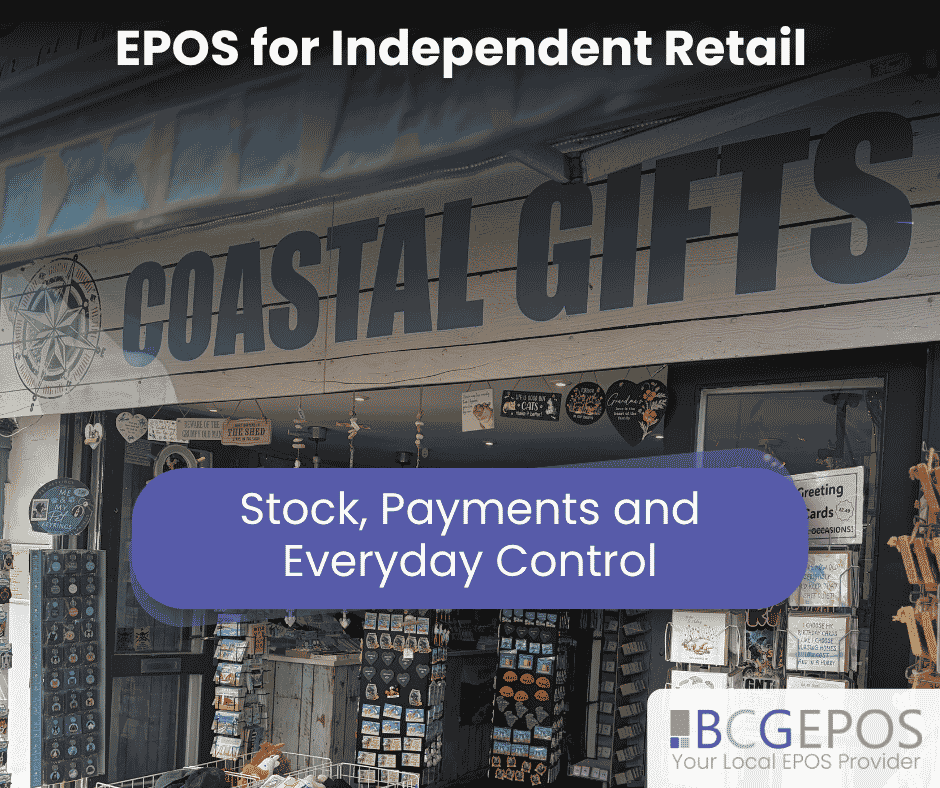
EPOS for independent retail needs to do more than process sales. For small shops, gift shops, convenience stores, homeware stores, clothing retailers and local retail businesses, the right system should make everyday trading easier to manage.
Independent retailers often work with small teams, busy counters, changing stock, seasonal demand and customers who expect quick, simple service. That means the EPOS system needs to support sales, payments, stock visibility and reporting without adding unnecessary complexity.
A good retail EPOS setup gives staff confidence at the point of sale and gives business owners clearer control behind the scenes. It helps every product, payment and transaction stay accounted for, while reducing the amount of manual checking needed day to day.
EPOS for Independent Retail That Supports Daily Trading
Independent retail businesses need systems that fit the way they actually operate. A coastal gift shop, local convenience store, boutique, farm shop or homeware retailer may all have different products, customer patterns and seasonal pressures.
During quieter periods, the system needs to be simple and reliable. During busier times, it needs to help keep queues moving and reduce mistakes at the till.
An EPOS system for independent retail should allow staff to process sales quickly, find products easily and manage payments without confusion. It should also support the business owner with useful reporting, product visibility and stock management.
The aim is not to overcomplicate the shop floor. The aim is to make everyday retail tasks easier, faster and more accurate.
Retail EPOS Systems for Sales, Stock and Reporting
A retail EPOS system should connect sales, stock and reporting in one clear setup.
Every sale provides useful information. It shows what customers are buying, when they are buying it and which products are performing well. When that data is captured properly, it becomes much easier to make decisions around ordering, pricing, promotions and stock control.
For independent shops, this visibility is especially important. Over ordering can tie up cash in stock that does not move quickly. Running out of popular products can lead to missed sales. Without clear reporting, it becomes harder to know what is actually happening.
A modern retail EPOS setup helps owners stay closer to the detail. Instead of relying on guesswork, they can review sales performance, monitor product trends and understand trading patterns more clearly.
Stock Control EPOS and TouchStock for Better Visibility
Stock control is one of the most valuable areas of EPOS for independent retail.
For shops with a wide product range, manually checking stock can be time consuming and prone to error. Gift shops, convenience stores, clothing retailers and homeware businesses often manage multiple product lines, seasonal items and changing ranges throughout the year.
TouchStock can support this process by helping retailers count stock, scan barcodes, check deliveries and generate labels. This makes it easier to keep product information accurate and reduce the risk of items being counted incorrectly.
Stock visibility helps retailers understand what is available, what needs reordering and where discrepancies may exist. It also supports better planning during seasonal periods, local events or busier trading windows.
For independent retailers, this kind of control can make a real difference. Better stock management means less time spent checking manually and more confidence in what the system is showing.
TouchStock:
https://bcgepos.com/touchstock/
Integrated Payments for Faster Retail Transactions
Payments are a key part of the customer experience in retail. Customers expect quick, simple and reliable ways to pay, whether they are using card, contactless or mobile payment methods.
Integrated payments help make this process smoother by connecting the payment terminal with the EPOS system. This reduces the need for staff to manually enter transaction amounts into a separate card machine, helping to avoid keying errors and speed up checkout.
For independent shops, this is particularly useful during busy periods. Faster payments help reduce queues and create a more professional checkout experience.
Integrated payments also make reconciliation easier. When payments and sales are connected more clearly, owners and managers have greater confidence that figures match at the end of the day.
Integrated Card Payments:
https://bcgepos.com/integrated-card-payments/
Customer Display Screens for Clearer Checkout Communication
Customer display screens can be a useful addition to a retail EPOS setup.
At the point of sale, customers want clarity. They want to see what has been scanned, what the price is and what the final total comes to before payment is taken. A customer facing display helps provide that transparency.
For independent retailers, the screen can also be used to support promotions, branded messages or seasonal offers when no transaction is active. This makes it more than just a display for totals. It becomes part of the wider customer experience at the counter.
In busy retail settings, clear communication helps reduce confusion and gives customers confidence that their purchase has been entered correctly.
Customer Advert Display:
https://bcgepos.com/customer-advert-display-for-epos-system/
EPOS Hardware for Independent Shops and Gift Shops
The right hardware depends on the type of retail business.
A simple independent shop may need a touchscreen terminal, cash drawer, receipt printer and payment terminal. A gift shop with many product lines may also benefit from barcode scanning and customer display screens. A business with stockrooms or frequent deliveries may need stock control tools that help manage products more accurately.
The hardware should match the way the business trades. There is no value in adding equipment that creates unnecessary complexity, but there is also a risk in relying on a basic setup that cannot support the business properly.
BCG EPOS provides EPOS hardware that can be configured around the needs of the business, helping retailers build a setup that is practical from day one.
EPOS Hardware:
https://bcgepos.com/epos-hardware/
Webshop Integration for Online and In-Store Retail
Many independent retailers now sell through more than one channel. A shop may have a physical counter, online sales, click and collect, local delivery or seasonal product promotions through a website.
When online and in-store sales are disconnected, stock and reporting can become harder to manage. Staff may need to update products manually, check orders separately or reconcile sales across different systems.
Webshop integration helps connect online sales with the wider EPOS setup. This can give retailers a clearer view of stock quantities, online orders, in-store sales and overall performance.
For independent retail businesses looking to grow, this connection can help make online and physical sales easier to manage together.
Webshop Integrations:
https://bcgepos.com/epos-webshop-integration/
Everyday Control for Independent Retail Owners
Independent retail owners often need to be close to every part of the business. Sales, products, stock, staff activity, promotions and customer experience all matter.
A strong EPOS system helps bring those areas together. It gives owners better visibility over what is selling, what needs attention and how the business is performing.
This everyday control is especially important for local retailers dealing with seasonal changes, tourism, events or fluctuating footfall. A coastal gift shop may have busy summer periods. A local convenience store may see regular daily peaks. A boutique may need to manage seasonal ranges and promotions.
The right EPOS system helps retailers respond with better information and fewer disconnected processes.
Local EPOS Support for Retail Businesses
Technology matters, but support matters just as much.
Independent retailers need confidence that their system is installed properly, configured correctly and supported over time. Products change, prices move, staff need training and stock processes may develop as the business grows.
Local EPOS support gives retailers access to practical help from a team that understands how the system is used day to day.
At BCG EPOS, the focus is on helping retail businesses choose systems that fit their real trading environment. That includes hardware, software, stock control, payments, reporting, setup, training and ongoing support.
The aim is not simply to supply a till. It is to provide a complete EPOS setup that helps independent retailers stay in control.
Choosing EPOS for Independent Retail
EPOS for independent retail should make sales, stock, payments and reporting easier to manage.
The right system should help staff serve customers quickly, give owners better visibility and reduce time spent on manual tasks. For independent shops, gift shops and smaller retailers, that practical support can make a real difference day to day.
Whether you need a simple counter setup, better stock visibility, integrated payments, customer display screens or webshop integration, BCG EPOS can help build a system around the way your business actually works.
To learn more about EPOS for retail businesses, visit:
https://bcgepos.com/epos-for-retail/
Useful pages:
TouchStock:
https://bcgepos.com/touchstock/
EPOS Hardware:
https://bcgepos.com/epos-hardware/
Integrated Card Payments:
https://bcgepos.com/integrated-card-payments/
Customer Advert Display:
https://bcgepos.com/customer-advert-display-for-epos-system/
Webshop Integrations:
https://bcgepos.com/epos-webshop-integration/
Or speak to the BCG EPOS team on 01803 313 222.