
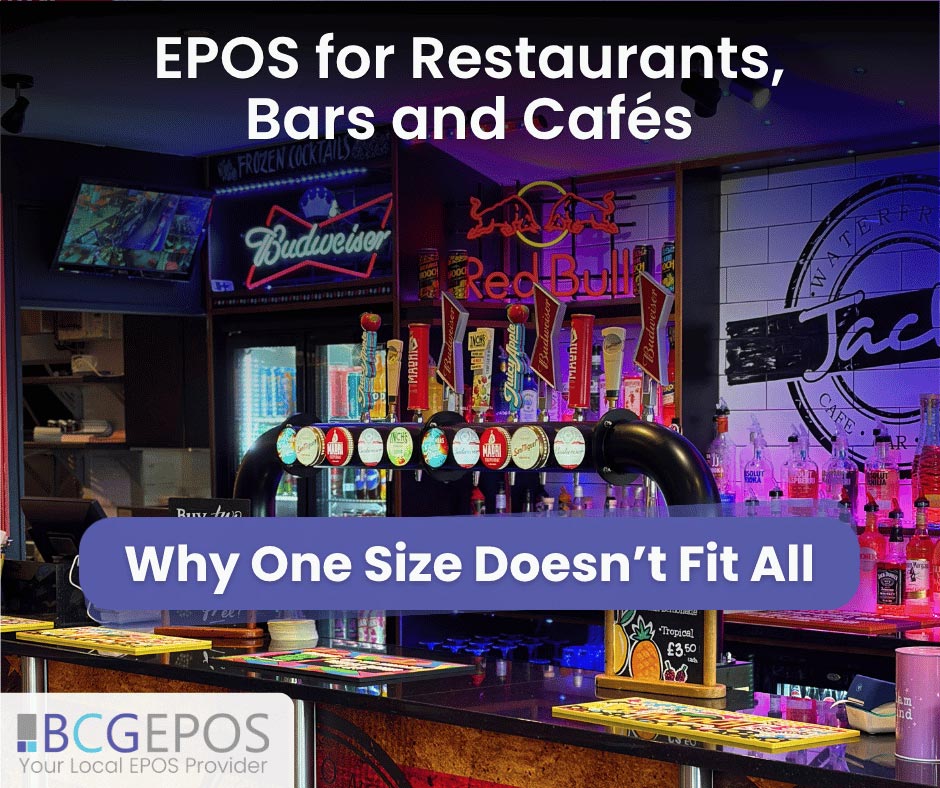
EPOS for restaurants, bars and cafés should never be treated as a one size fits all solution. Every hospitality business has its own rhythm, service style, team structure and customer expectations. What works perfectly for a busy restaurant may not be right for a fast moving café, and what supports a high volume bar may not suit a coastal venue with outdoor seating and seasonal peaks.
That is why choosing the right hospitality EPOS system needs to start with how the business actually operates. The best setup is not always the biggest or most complex. It is the one that supports real service, helps staff work confidently and gives owners clearer control over day to day performance.
For local hospitality businesses, EPOS is about more than taking payments. It affects ordering, table management, kitchen communication, reporting, stock, staff efficiency and customer experience. When the system is shaped around the venue, it becomes a practical tool that supports smoother service.
EPOS for Restaurants, Bars and Cafés Needs to Fit the Way You Serve
Restaurants, bars and cafés all serve customers differently.
A restaurant may rely on table service, split bills, kitchen display systems and handheld ordering. A bar may need fast transactions, simple product navigation, stock control and integrated payments. A café may need quick counter service, takeaway options and clear reporting across busy morning and lunchtime periods.
Coastal venues and seasonal hospitality businesses can add another layer of complexity. Outdoor seating, changing footfall, summer trade and event led service all place different demands on the system.
This is why a generic EPOS setup can quickly become frustrating. If staff have to work around the system, service becomes slower and less efficient. If the setup reflects the way the venue actually trades, the system becomes a natural part of the operation.
Restaurant EPOS Systems for Table Service and Kitchen Communication
Restaurants need EPOS systems that support the full service journey.
Orders need to be taken accurately, sent to the kitchen clearly and managed efficiently from table to payment. This is where restaurant EPOS systems with table management, handheld ordering and kitchen display integration can make a real difference.
Handheld ordering allows staff to take orders at the table and send them directly to the kitchen. This reduces unnecessary trips back to a fixed terminal and helps orders reach the kitchen faster. It can also reduce mistakes because modifiers, special requests and dietary requirements can be entered clearly at the point of order.
Kitchen display integration supports better communication between front of house and back of house. Instead of relying on paper tickets or verbal updates, kitchen teams can see live orders in a clear digital workflow.
For restaurants, EPOS should support timing, accuracy and service flow. The right setup helps staff stay focused on customers rather than managing unnecessary system friction.
Bar EPOS Systems for Speed, Stock and Payment Integration
Bars operate under different pressures. Speed is often the priority, especially during evenings, weekends, events and peak service periods.
A bar EPOS system needs to help staff move quickly through transactions. Product screens should be simple to navigate, payments should be smooth and the system should remain reliable when demand increases.
Integrated payments are particularly valuable in bar environments. When payment terminals connect directly with the EPOS system, staff do not need to manually enter amounts into a separate device. This helps reduce errors and keeps queues moving.
Stock visibility also matters. Bars need to understand what is selling, when demand is highest and where stock levels need attention. A good EPOS system can support stock control and reporting, helping operators make better decisions around ordering, pricing and product performance.
For bars and pubs, EPOS should support speed without sacrificing control.
Café EPOS Systems for Counter Service, Takeaway and Daily Simplicity
Cafés often need a different kind of EPOS setup. Service may be fast paced but more compact, with a focus on counter ordering, takeaway, card payments and simple product management.
A café EPOS system should be quick for staff to use and easy to update. Menu changes, daily specials, product categories and pricing should be manageable without adding unnecessary admin.
For cafés offering takeaway or outdoor seating, flexibility becomes even more important. Staff may need to process orders quickly during morning rushes, lunchtime peaks or seasonal busy periods.
The right system should support that pace while keeping reporting clear. Owners and managers need to understand which products sell well, when the busiest periods happen and how the business is performing day to day.
For cafés, EPOS should make service feel easier, not more complicated.
EPOS for Coastal Venues and Seasonal Hospitality Businesses
Many local hospitality businesses experience seasonal patterns. Coastal cafés, seafront restaurants, pubs with beer gardens and venues in tourist areas may see demand change dramatically depending on the weather, school holidays, events and summer footfall.
These businesses need systems that can handle changing pressure.
Outdoor ordering, handheld EPOS, mobile payment options and connected reporting can all support venues during busier periods. Staff can take orders away from fixed tills, reduce unnecessary movement and keep service flowing across indoor and outdoor areas.
For coastal venues, reliability is especially important. When the sun comes out and customer numbers rise quickly, the EPOS system needs to keep up. Slow transactions, disconnected ordering or unclear reporting can limit how effectively the venue handles increased demand.
A practical EPOS setup gives teams more confidence when service is unpredictable.
Handheld Ordering, Integrations and Reporting Should Match the Business
Modern hospitality EPOS systems can include a wide range of tools, but not every business needs the same combination.
Handheld ordering may be essential for a restaurant with table service, but less important for a small counter service café. Kitchen display integration may be valuable for food led venues, while payment integration may be the priority for a fast paced bar. Online ordering may matter for takeaways, cafés and restaurants offering collection.
Reporting is important across all venue types, but the level of detail needed may vary. A single site café may need simple daily sales insight, while a multi area restaurant or bar may need product level reporting, staff performance and stock visibility.
The important point is that each tool should serve a clear purpose.
At BCG EPOS, the focus is on helping businesses choose the right setup around their service model, not simply selling one system to everyone.
Local EPOS Support for Hospitality Businesses
Technology matters, but support matters just as much.
Hospitality businesses need help with setup, training, troubleshooting and ongoing changes. Menus change, staff change, prices change and service models evolve. The EPOS system needs to keep up with the business.
Local EPOS support gives operators confidence that help is available from people who understand the environment. A team that has worked with cafés, restaurants, bars, pubs, hotels and coastal venues can offer practical guidance shaped around real hospitality settings.
This is especially valuable when businesses are reviewing their current setup or planning improvements ahead of busier trading periods.
BCG EPOS takes a hands on, relationship led approach. The team works with businesses to understand how they operate, what pressure points they face and what kind of system will support them best.
Choosing the Right EPOS Setup for Your Venue
EPOS for restaurants, bars and cafés should be practical, reliable and shaped around the way the venue serves customers.
A restaurant may need table service tools, handheld ordering and kitchen integration. A bar may need speed, stock control and payment integration. A café may need simplicity, takeaway support and clear reporting. A coastal venue may need flexibility for outdoor service and seasonal demand.
There is no single setup that suits every hospitality business.
The right EPOS system should make daily service easier, give staff confidence and provide owners with better visibility. It should support the business today while giving it room to adapt as customer expectations and trading patterns change.
At BCG EPOS, we help hospitality businesses choose systems that fit real service environments. Whether you run a restaurant, bar, café, pub, hotel or coastal venue, our focus is on practical EPOS solutions backed by local support.
To learn more, visit:
Or speak to the BCG EPOS team on 01803 313 222.