
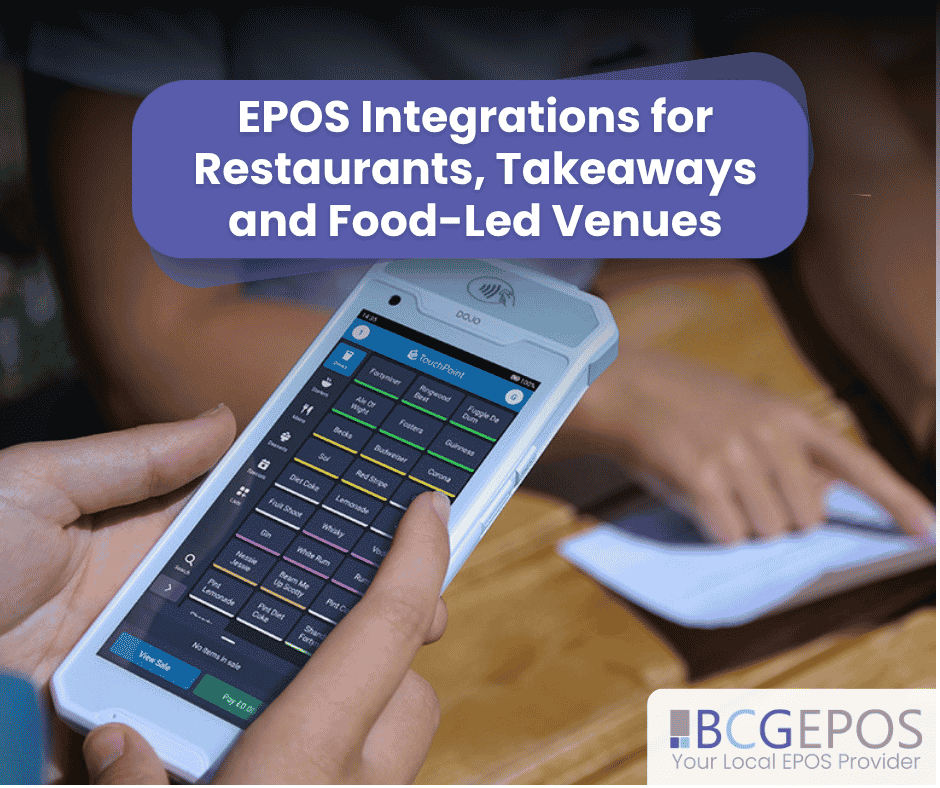
Food-led hospitality businesses all rely on speed, accuracy and control, but they do not all operate in the same way. A restaurant with table service, a takeaway handling online orders, a café serving quick lunchtime trade and a mobile food business working events will each need different tools around their core EPOS system.
That is why EPOS integrations for restaurants, takeaways and food-led venues need to be considered carefully. The goal is not to connect every possible system for the sake of it. The goal is to build a setup that reflects how the business actually works.
When the right integrations are in place, orders move more clearly, payments are easier to manage, kitchen communication improves and reporting becomes more useful. When systems are disconnected, staff spend more time repeating tasks, checking platforms and fixing avoidable mistakes.
For busy hospitality operators, integration is not just a technical feature. It is what makes the day to day operation easier to run.
EPOS Integrations for Restaurants and Table Service Venues
Restaurants need EPOS systems that support the full service journey, from taking an order at the table to sending it through to the kitchen and processing payment at the end of the meal.
EPOS integrations for restaurants often include handheld ordering, kitchen display systems, payment integrations, booking tools, stock control and back office reporting. Each integration should support the way service actually happens.
For example, handheld ordering allows staff to take orders at the table and send them straight to the kitchen. Kitchen display integration helps chefs receive clear order information without relying on paper tickets or verbal communication. Integrated payments reduce manual entry and make bill settlement smoother.
These connections matter because restaurant service is built around timing. If the ordering process is slow, the kitchen communication is unclear or payment takes too long, the customer experience is affected.
A connected restaurant EPOS setup helps front of house, kitchen and management teams work from the same information. That creates a more efficient service flow and gives operators better visibility across the business.
Learn more about EPOS for restaurants here:
https://bcgepos.com/epos-for-restaurants/
EPOS Integrations for Takeaways and Online Ordering
Takeaways work differently from table service restaurants. Order volume can rise quickly, especially during evenings, weekends and seasonal peaks. Customers may order at the counter, over the phone, through online ordering platforms or via delivery channels.
EPOS integrations for takeaways need to support that pressure.
Online ordering integration is particularly important. If online orders need to be manually re-entered into the EPOS system, mistakes become more likely and staff lose valuable time during busy service. A connected setup allows online orders to flow more directly into the EPOS and kitchen workflow.
Kitchen display systems can also make a significant difference in takeaway environments. Orders from different channels can be managed in one clearer workflow, helping kitchen teams prioritise preparation and reduce confusion.
Payment integrations, reporting tools and product level data also help takeaway operators understand performance more clearly. When the system captures sales across different ordering channels, managers can see what is selling, when demand is highest and where improvements may be needed.
For takeaway businesses, the right integrations support speed and accuracy without adding unnecessary admin.
Learn more about EPOS for takeaways here:
https://bcgepos.com/epos-for-takeaways/
EPOS Integrations for Food Led Venues with Mixed Service Models
Many hospitality businesses do not fit neatly into one category. Cafés, pubs with food, hotels, event venues, visitor attractions, food vans and pop-up operators may all have different service styles operating at the same time.
This is where EPOS integrations for food led venues become especially important.
A café might need fast counter service, card payment integration and clear reporting. A pub serving food may need table ordering, bar tabs, stock control and kitchen communication. A hotel may need EPOS across restaurant, bar and function spaces. A food van may need a simpler payment and order taking solution that works well in mobile environments.
The right setup depends on the business model.
For some food-led venues, a full EPOS ecosystem with tills, handheld devices, kitchen display systems and reporting will be the right fit. For others, a more compact solution, such as an all-in-one payment device, may be more practical.
What matters is that the technology supports the service model rather than making it more complicated.
Online Ordering, Delivery and Collection Integrations
Online ordering has become an important part of many restaurant and takeaway operations. However, it can create problems if it is not connected properly to the main EPOS system.
When online orders sit in a separate platform, staff often have to copy information manually into the till or kitchen system. This takes time and increases the risk of errors.
Integrated online ordering helps reduce that problem by connecting digital orders with the wider EPOS workflow. Orders can be processed more clearly, routed to the right preparation area and included in reporting.
For restaurants offering collection, takeaways handling high volumes and food-led venues using delivery platforms, this kind of integration can improve both service speed and accuracy.
BCG EPOS supports hospitality businesses with integrations for online ordering and delivery platforms, helping operators create a more joined up approach across sales channels.
Payment Integrations for Faster, Smoother Transactions
Payments are one of the most practical areas for EPOS integration.
When payment terminals are not connected to the EPOS system, staff may need to manually key transaction amounts into a card machine. This can slow service and create avoidable mistakes, particularly during busy periods.
Integrated payments help remove that duplication. Transaction details can pass between the EPOS and payment device more smoothly, supporting faster service and easier reconciliation.
For restaurants, this can improve the payment experience at the table. For takeaways and cafés, it can help keep queues moving. For food-led venues handling high footfall, integrated payments can reduce pressure at the point of sale.
BCG EPOS works with payment integration options such as Teya, Dojo and Barclaycard, giving businesses flexible ways to connect payments with their wider EPOS setup.
Useful integration pages include:
https://bcgepos.com/teya-epos-integration/
https://bcgepos.com/dojo-epos-integration/
https://bcgepos.com/barclaycard-epos-integration/
Stock, Reporting and Back Office EPOS Integrations
Food-led businesses need good visibility over performance. Without accurate reporting, it becomes harder to understand sales trends, manage stock, monitor margins and make confident decisions.
Back office EPOS integrations help operators bring sales, stock and reporting data together. This allows managers to review performance more clearly and reduce the amount of manual checking needed.
Stock visibility is particularly useful for restaurants, pubs, cafés and takeaways where product movement changes throughout the day. If a popular item is selling quickly, operators need to know. If certain products are underperforming, that insight can inform menu changes or promotions.
Reporting integration also supports better planning. Businesses can identify peak trading times, compare products and understand which channels are driving revenue.
For multi-site or growing businesses, this level of visibility becomes even more important.
Accounting Integrations That Reduce Manual Admin
Accounting integrations can also make hospitality businesses easier to manage.
When EPOS sales data and accounting software are disconnected, information often has to be entered manually. This creates extra work and increases the risk of incorrect figures.
Connecting EPOS with accounting tools can help reduce this admin and make financial reporting more consistent. For busy operators, that means less time spent moving data between systems and more confidence in the numbers being used.
Xero EPOS integration is one example of how accounting tools can connect with hospitality EPOS setups.
https://bcgepos.com/xero-epos-integration/
For restaurants, takeaways and food-led venues, this kind of integration can support better financial control without adding unnecessary complexity.
How BCG EPOS Helps Build the Right Connected Setup
No two hospitality businesses need exactly the same EPOS integrations.
A restaurant may need handheld ordering and kitchen display systems. A takeaway may need online ordering and delivery integration. A café may need fast payments and simple reporting. A food van may need a compact order and payment setup. A pub or hotel may need a broader system that connects multiple departments.
At BCG EPOS, the focus is on matching the setup to the business.
Rather than recommending integrations in isolation, the team looks at how the venue operates, where pressure points exist and what systems need to work together. This helps create an EPOS setup that supports real service conditions, not just technical requirements.
The best integrations are the ones that reduce friction. They help staff work more efficiently, give managers clearer visibility and make the business easier to run.
Choosing EPOS Integrations That Fit Your Food Business
EPOS integrations can transform how restaurants, takeaways and food-led venues operate, but only when they are chosen for the right reasons.
The aim should be to connect the systems that matter most to the business. That might include online ordering, payments, kitchen display systems, accounting, stock control or reporting.
When these tools work together, teams spend less time duplicating tasks and more time focusing on customers. Orders move more accurately. Payments become smoother. Reporting becomes more reliable. Management becomes clearer.
If your current setup feels disconnected, or if your business is growing and needs better control, it may be time to review how your EPOS integrates with the rest of your operation.
To explore restaurant EPOS solutions, visit:
https://bcgepos.com/epos-for-restaurants/
To learn more about takeaway EPOS solutions, visit:
https://bcgepos.com/epos-for-takeaways/
Or speak to the BCG EPOS team on 01803 313 222.