
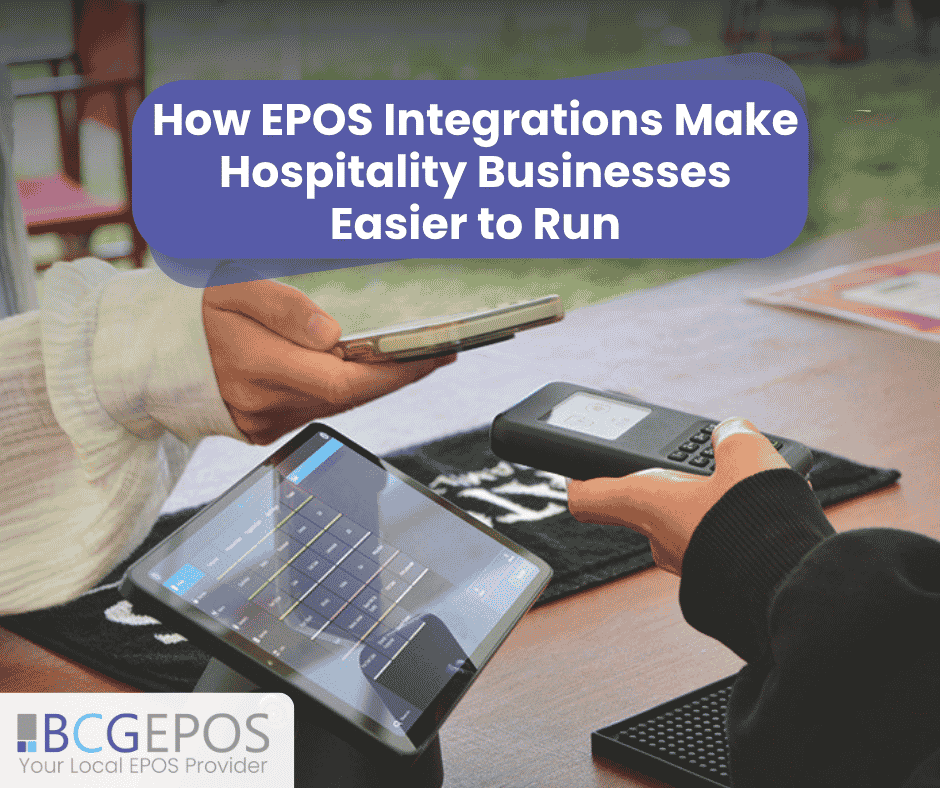
Hospitality businesses are rarely short of systems. A restaurant might use one platform for card payments, another for online ordering, another for accounting, another for reporting and a separate setup for stock or kitchen communication. Each tool may serve a purpose, but when they do not connect properly, they create extra work.
That is why EPOS integrations matter. The real value of a modern EPOS system is not just the till itself. It is how well that till connects with the tools your business already relies on.
For restaurants, pubs, bars, hotels, takeaways and event venues, integrated systems can reduce admin, improve visibility and help teams work more efficiently during busy service. Instead of managing separate platforms, hospitality operators can build a connected setup around how the business actually runs.
Why Disconnected Hospitality EPOS Systems Create Extra Work
Disconnected systems are one of the most common causes of avoidable admin in hospitality.
When your EPOS system, payment provider, online ordering platform, accounting software and kitchen systems all operate separately, staff often have to repeat tasks manually. Orders may need to be copied from one platform into another. End of day figures may need to be checked across multiple systems. Managers may have to compare separate reports before they can understand performance.
This creates more work and increases the risk of mistakes.
For hospitality teams already working under pressure, this can quickly become frustrating. During busy service, disconnected systems can slow down ordering, create confusion between front of house and kitchen, and make it harder to keep control over the operation.
A connected EPOS system helps reduce those problems by allowing key systems to work together more smoothly.
EPOS Payment Integrations for Faster Transactions
Payment integration is one of the most practical ways to improve day to day service.
When card payments are not integrated with the EPOS system, staff may need to manually enter transaction amounts into a separate payment terminal. This slows service and creates room for errors, especially during busy periods.
With EPOS payment integrations, transaction details can flow directly between the till and the payment device. This helps speed up service, reduce manual keying and simplify reconciliation at the end of the day.
For hospitality businesses, this matters because payment is often the final part of the customer experience. A slow or awkward payment process can affect the overall impression, even if the food, drinks or service have been good.
BCG EPOS supports businesses with payment integration options including Teya, Dojo and Barclaycard.
Teya EPOS Integration:
https://bcgepos.com/teya-epos-integration/
Dojo EPOS Integration:
https://bcgepos.com/dojo-epos-integration/
Barclaycard EPOS Integration:
https://bcgepos.com/barclaycard-epos-integration/
Online Ordering Integrations for Restaurants and Takeaways
Online ordering is now a major part of hospitality, especially for restaurants, takeaways and venues offering collection or delivery. However, online orders can create problems if they do not connect properly with the main EPOS system.
If staff have to manually re-enter orders from delivery platforms or online ordering systems, mistakes become more likely. Orders can be missed, delayed or entered incorrectly. Kitchen teams may also have to manage multiple order streams, which can make service harder to control.
Online ordering integrations help by sending orders directly into the EPOS and kitchen workflow. This reduces duplication and helps keep orders moving clearly from customer to preparation.
For takeaways and busy food service businesses, this can make a significant difference. When order volumes are high, the system needs to support speed and accuracy without adding more pressure to the team.
BCG EPOS supports integrations for platforms such as Just Eat and Deliveroo, helping restaurants, takeaways and hospitality venues connect online orders with their EPOS setup.
Just Eat EPOS Integration:
https://bcgepos.com/just-eat-epos-integration/
Deliveroo EPOS Integration:
https://bcgepos.com/deliveroo-epos-integration/
Accounting EPOS Integrations for Reduced Admin
Accounting is another area where integration can save significant time.
When EPOS data and accounting software are separate, sales figures often need to be transferred manually. This can create extra admin for owners, managers or finance teams, and increases the risk of incorrect figures being entered.
Accounting EPOS integrations help connect sales data with accounting platforms, making reconciliation and financial reporting easier to manage.
For hospitality businesses, this supports better financial control. Instead of spending unnecessary time checking figures across different systems, operators can work from more consistent data.
Xero EPOS integration is one example of how connecting EPOS and accounting software can help reduce manual work and improve accuracy.
Xero EPOS Integration:
https://bcgepos.com/xero-epos-integration/
EPOS Integrations for Stock, Reporting and Operational Visibility
EPOS integrations are not only about reducing admin. They also help improve visibility.
When systems are connected, operators get a clearer view of what is happening across the business. Sales, stock movement, online orders, payment activity and reporting can all work together to provide more useful insight.
This is especially important for hospitality businesses with multiple departments or locations. A hotel may need visibility across bar, restaurant and event sales. A pub group may need to compare performance across sites. A takeaway may need to understand which ordering channels are driving the most revenue.
Integrated EPOS reporting helps operators make better decisions because the data is easier to access and more reliable.
Instead of guessing what is happening, managers can review performance with more confidence.
Webshop and Retail EPOS Integrations for Connected Sales Channels
Some hospitality and retail businesses also sell products online. This might include merchandise, gift items, packaged goods or other retail products linked to the business.
When online sales and EPOS systems are disconnected, staff may need to manually update stock, process orders or compare sales data across platforms. This can become time consuming as order volumes grow.
Webshop integrations help connect online sales with EPOS and back office systems, creating a more joined up approach across physical and digital sales channels.
This can be useful for hospitality businesses with retail elements, visitor attractions, farm shops, gift shops, hotels and venues selling products online.
BCG EPOS supports webshop integration options including WooCommerce, Shopify, Magento and other ecommerce platforms.
Webshop Integrations:
https://bcgepos.com/epos-webshop-integration/
EPOS Integrations for Restaurants, Pubs, Hotels and Takeaways
The right EPOS integrations depend on the type of hospitality business.
Restaurants may need table management, handheld ordering, kitchen display integration and payment integration to keep service moving smoothly. Pubs and bars may prioritise fast payments, stock control and reporting. Hotels often need connected systems across bar, restaurant and wider guest services. Takeaways need online ordering, kitchen workflows and accurate order management.
This is why there is no single standard setup that works for every business.
A good EPOS partner should look at how the business operates before recommending integrations. The aim should be to build a system around real workflows, not add technology for the sake of it.
For BCG EPOS, this service led approach is important. The focus is on helping hospitality businesses create the right connected setup for their venue, team and long term plans.
How Connected EPOS Systems Make Hospitality Businesses Easier to Run
The biggest benefit of EPOS integrations is simplicity.
When systems connect properly, teams spend less time duplicating tasks and more time focusing on service. Orders flow more clearly. Payments are easier to process. Reporting becomes more reliable. Admin is reduced. Managers get better visibility.
This does not mean every hospitality business needs every integration. It means the systems that matter to the business should work together wherever possible.
A connected EPOS setup can support:
Faster transactions
Better order accuracy
Reduced manual admin
Clearer kitchen communication
Improved reporting
More reliable data
Better control across the business
For busy hospitality operators, these improvements can make day to day management significantly easier.
Build the Right EPOS Integration Setup Around Your Business
Modern hospitality businesses need more than standalone systems. They need connected tools that support the way they actually operate.
Whether you run a restaurant, pub, bar, hotel, takeaway, retail store or multi site hospitality business, EPOS integrations can help reduce friction and improve control.
At BCG EPOS, we help businesses build practical, connected EPOS setups that bring together payments, online ordering, accounting, reporting and wider operational tools. The goal is not to overcomplicate the system. It is to make the business easier to run.
To learn more about EPOS systems and integrations for your hospitality or retail business, visit:
Or speak to the BCG EPOS team on 01803 313 222.