
In busy hospitality environments, service speed is everything. Whether you are running a restaurant, pub or high volume venue, the efficiency of your kitchen directly impacts customer experience, table turn times and overall profitability.
While front of house often receives the most attention, many service delays originate in the kitchen. The way orders are received, prioritised and communicated can either support a smooth operation or create bottlenecks during peak periods.
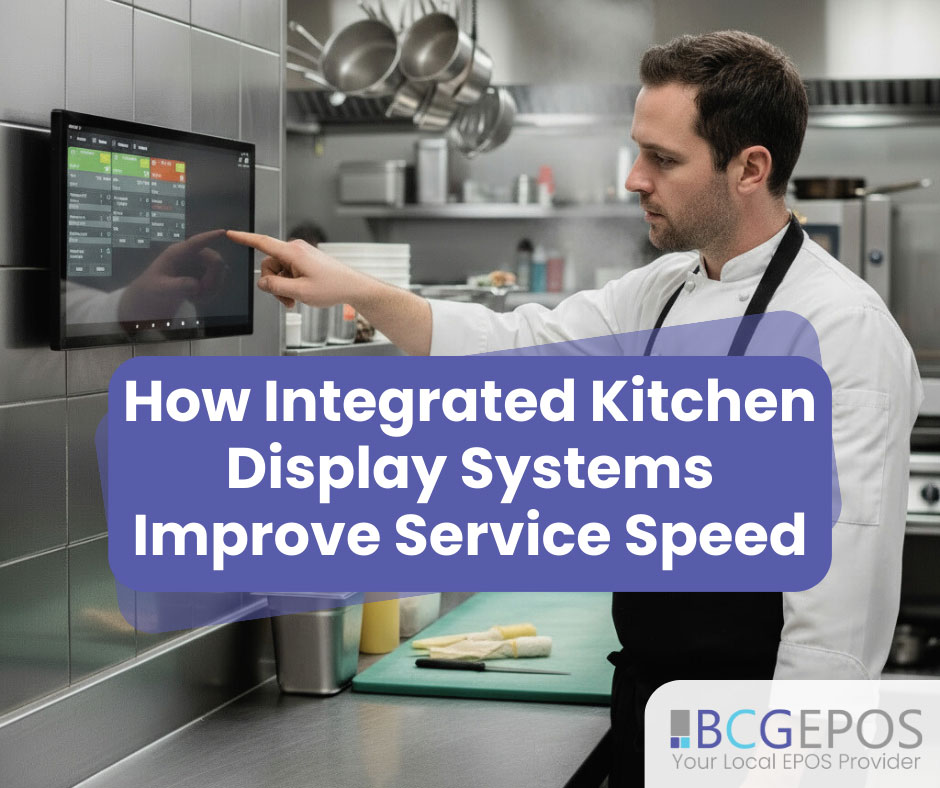
This is where integrated kitchen display systems make a measurable difference. By replacing paper based workflows with real time digital communication, kitchens can operate with greater speed, accuracy and visibility.
The Problems with Paper-Based Kitchen Workflows
Many hospitality businesses still rely on printed tickets or handwritten dockets to manage kitchen orders. While this approach may feel familiar, it introduces several inefficiencies.
Paper tickets can be lost, misread or damaged in a busy kitchen environment. Handwritten notes increase the risk of errors, particularly during peak service when staff are under pressure. As orders build up, it becomes harder to prioritise tickets effectively, leading to delays and inconsistent preparation times.
Communication between front of house and kitchen can also break down. If an order is amended or cancelled, paper systems rely on staff relaying that information manually, which increases the chance of mistakes.
These issues may seem small individually, but over the course of a busy service they compound into slower ticket times, incorrect orders and frustrated teams.
Syncing Handheld, Kiosk and POS Orders in Real Time
Modern hospitality environments are no longer reliant on a single ordering channel. Orders can come from fixed POS terminals, handheld devices, QR ordering systems and self-service kiosks.
Without proper integration, managing these multiple inputs becomes complex. Orders may arrive at different points, require manual re-entry or lack consistency in how they are displayed to kitchen staff.
An integrated kitchen display system connects all ordering channels into one central workflow. Whether an order is placed at the bar, at the table via handheld POS or through a kiosk, it appears instantly on the kitchen screen in a clear, structured format.
This real time synchronisation ensures that the kitchen always has an accurate and up to date view of incoming orders, regardless of where they originate.
Reducing Errors Through Clear Digital Communication
One of the biggest advantages of kitchen display systems is the reduction in errors.
Digital orders eliminate issues caused by illegible handwriting or incomplete information. Modifiers, special requests and dietary requirements are displayed clearly on screen, ensuring that kitchen staff can prepare each dish accurately.
Because the system is integrated with the POS, there is no need for manual transcription. Orders are sent directly from the point of entry to the kitchen, removing a common source of mistakes.
In addition, changes to orders can be updated in real time. If a dish is modified or cancelled, the kitchen display reflects this immediately, preventing unnecessary preparation and waste.
Improving Ticket Times and Kitchen Efficiency
Speed in the kitchen is not just about working faster. It is about managing workflow more effectively.
Kitchen display systems allow orders to be prioritised and organised in a way that supports efficient preparation. Tickets can be grouped, timed and routed to specific stations based on the type of order.
For example, drinks, starters and mains can be managed separately, ensuring that each part of the order is prepared at the right time. This helps maintain consistency and improves coordination between different kitchen sections.
Real time visibility also allows kitchen staff to monitor how long each order has been active. This makes it easier to identify delays and keep service moving during busy periods.
The result is improved ticket times, smoother kitchen operations and a more consistent dining experience for customers.
Gaining Better Data Visibility and Performance Insights
An integrated kitchen display system does more than improve day to day operations. It also provides valuable data that can be used to optimise performance.
Operators can track preparation times, identify peak service periods and analyse how efficiently the kitchen is operating. This information can be used to adjust staffing levels, refine menu design and improve overall service delivery.
For multi site businesses, this data becomes even more valuable. Comparing kitchen performance across different locations allows operators to identify best practices and address inefficiencies.
Without digital systems in place, this level of insight is difficult to achieve.
How ACE Kitchen Supports a Connected Hospitality Operation
At BCG EPOS, we see first hand how much of an impact kitchen workflow has on overall service performance. Many of the operators we work with are moving away from paper based systems in favour of fully integrated digital solutions.
ACE Kitchen is designed to connect seamlessly with the wider ACE POS ecosystem. Orders from POS terminals, handheld devices and kiosks are sent directly to the kitchen display system in real time.
This ensures that all parts of the operation are aligned. Front of house, kitchen and management reporting all work from the same data, reducing friction and improving visibility.
By integrating kitchen display systems with the rest of your EPOS setup, you create a more efficient and reliable operation that is better equipped to handle busy service periods.
If you are looking to improve service speed and reduce errors in your kitchen, you can learn more about ACE Kitchen here:
https://bcgepos.com/ace-kitchen/
To discuss your current setup and explore how an integrated kitchen display system could support your business, call BCG EPOS on 01803 313 222.