
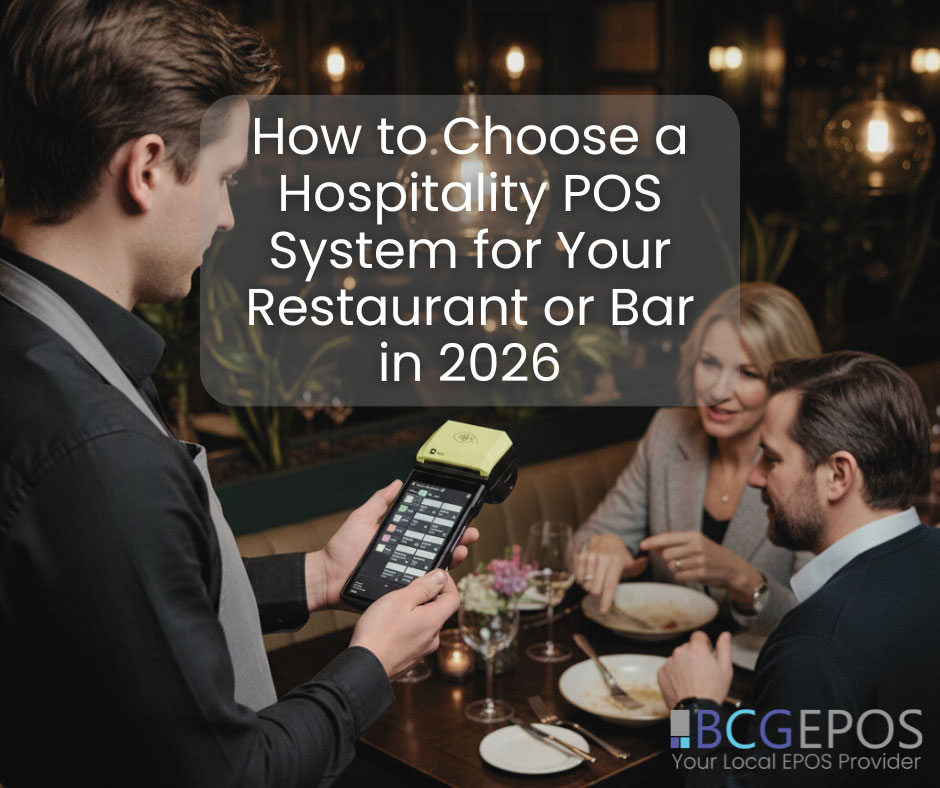
Choosing a hospitality POS system in 2026 is no longer just about processing payments. For restaurants, pubs and bars, your POS system now sits at the centre of your operation. It connects front of house, kitchen workflow, reporting, stock control and customer experience into one ecosystem.
With more operators reviewing outdated systems and exploring modern Android POS solutions, the decision has become more strategic. This guide will walk you through what to consider, what to avoid and how to choose a hospitality POS system that genuinely supports your business long term.
Why Hospitality Businesses Are Replacing Legacy POS Systems
Many restaurants and bars are still operating on legacy EPOS systems that were installed five to ten years ago. While these systems may still function, they often lack the flexibility and integration required in modern hospitality environments.
Today’s operators need real time sales reporting, integrated kitchen display systems, mobile POS devices for tableside ordering and seamless card payment integration. They also expect compatibility with QR ordering, self service kiosks and cloud based back office management tools.
Legacy systems frequently struggle with:
Limited integration between POS and kitchen screens
Slow software updates and outdated hardware
Restricted reporting capabilities
High maintenance costs
Poor scalability for multi site expansion
As labour costs rise and margins tighten, inefficiencies caused by disconnected systems quickly become expensive. Modern hospitality POS software is designed to reduce friction between service, kitchen production and management oversight. That is why so many operators are now replacing traditional till systems with integrated hospitality technology platforms.
At BCG EPOS, we regularly support businesses transitioning from older Windows based or closed systems to flexible Android POS systems that offer greater reliability, faster performance and improved integration.
The Difference Between Retail POS and Hospitality POS
Not all POS systems are built for hospitality. A retail POS system focuses primarily on straightforward transactions, barcode scanning and stock management. In contrast, a hospitality POS system must handle complex service environments.
Restaurants and bars require features such as:
Table management and split billing
Course firing and kitchen routing
Modifier control for menu variations
Integration with kitchen display software
Bar tab management
Happy hour pricing rules
Real time communication between front and back of house
Hospitality POS software must be built around service flow, not just sales processing. The speed at which orders move from a handheld POS device to a kitchen screen can directly affect table turn times and customer satisfaction.
Choosing a system designed specifically for hospitality ensures that your POS supports your operational reality rather than forcing your team to adapt to retail based limitations.
Why Android Based POS Systems Are Gaining Ground
Android POS systems have become increasingly popular in hospitality due to their flexibility, reliability and hardware affordability.
Unlike older proprietary systems, Android based POS hardware allows for sleek touch screen terminals, handheld ordering devices and portable payment solutions that integrate seamlessly with your main POS software.
Benefits of Android POS systems include:
Lower hardware costs compared to traditional setups
Faster software updates
User friendly interfaces
Scalability for multi site hospitality groups
Improved integration with mobile POS and QR ordering
Android platforms also allow for better ecosystem connectivity. Whether it is kitchen display integration, self service ordering kiosks or a management app providing live sales data, modern Android hospitality POS systems are built with connectivity in mind.
BCG EPOS has supported many restaurants and pubs in moving to Android based EPOS systems, particularly where businesses want handheld POS devices for tableside ordering and payment at the table. The operational efficiency gained from this shift is often immediate.
The Importance of Local Support and Onboarding
Technology alone does not deliver results. Implementation, training and ongoing support are what determine whether your hospitality POS system becomes an asset or a frustration.
When choosing a POS supplier, consider:
Who installs the system?
Who trains your staff?
Is support handled locally or through a remote call centre?
How quickly can engineers attend site if required?
Hospitality businesses operate long hours, including evenings and weekends. If your POS system fails during peak service, delayed support can have a direct financial impact.
At BCG EPOS, the focus is not simply on supplying POS hardware and software. We work closely with operators during onboarding, menu programming, system configuration and staff training. That hands on approach ensures the system is tailored to your workflow from day one.
A service led partnership often makes the difference between a smooth transition and operational disruption.
Questions to Ask Before Signing a POS Contract
Before committing to a hospitality POS system, it is important to ask the right questions.
How flexible is the contract term?
Are software updates included?
Is the system cloud based or locally hosted?
What integrations are available for kitchen display systems, QR ordering and mobile POS?
Are there additional fees for adding handheld devices or extra terminals?
How easily can the system scale if you open a second site?
You should also ask for a demonstration that reflects your real service environment. A busy restaurant with table service has very different requirements compared to a high volume bar.
Understanding the full cost structure, including hardware, software licensing, support and payment processing integration, prevents surprises later.
Common Mistakes When Choosing a POS Supplier
One of the most common mistakes is choosing purely on price. A low cost POS system may lack the integration, support or reliability required for a hospitality environment.
Other mistakes include:
Selecting a retail focused POS for a restaurant
Overlooking training and onboarding
Ignoring contract flexibility
Failing to plan for future growth
Choosing a supplier without local support
Another frequent issue is underestimating the importance of integration. A disconnected system where POS, kitchen screens and payment devices operate separately creates inefficiencies and increases the risk of errors.
Modern hospitality businesses benefit from an integrated EPOS ecosystem where POS terminals, kitchen display systems, QR ordering, mobile POS and management reporting tools all work together.
Choosing a Hospitality POS Partner for 2026 and Beyond
In 2026, a hospitality POS system should do far more than process transactions. It should support service speed, reduce errors, provide real time reporting and adapt as your business grows.
The right decision comes down to three core factors: functionality built specifically for hospitality, modern Android based flexibility and reliable local support.
If you are reviewing your current system or planning a new opening, speak to a team that understands the operational pressures of restaurants and bars.
You can explore our dedicated restaurant EPOS solutions at
https://bcgepos.com/epos-for-restaurants/
Or view our pub and bar EPOS systems at
https://bcgepos.com/epos-for-pubs-bars/
For a conversation about upgrading your hospitality POS system, contact BCG EPOS on 01803 313222 or visit www.bcgepos.com.